Lietuviškai
 English



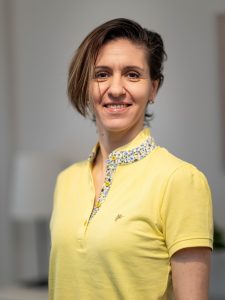
Medical psychologist Meda Bagušinskė
SPECIALIZATION:
Mood disorders and anxiety, autism spectrum disorders, attention and activity problems.
Counseling of children, adolescents and parents
Individual and group therapy. Psychodynamic therapy. Humanistic therapy. Elements of movement.
In Lithuanian, English
ABOUT
I can never change the direction of the wind, but I can always adjust the sails to achieve my goal. (Jimmy Dean)
Hello! I am Meda Bagušinskė, a licensed medical psychologist. In my professional path, I am guided by openness, curiosity, confidentiality, flexibility. I am empathetic and decisive, and my clients would also describe me as witty, clever, understanding, supportive, energetic. My mission and role as a psychologist is to be a beacon, to illuminate the path that the client is walking, so that he / she can independently find brighter paths in the future.
Working together
Therapy is a life that fits into a narrower space. Therefore, when communicating with clients, I believe in naturalness and create an immediate, as unstructured atmosphere as possible. This makes it easier for me to reach the client’s subconscious and the signals they send. Intense emotions, familiar and silent pauses are experienced in therapy.
I expect openness from my client, to be who they are, to feel what they want to feel, because then therapy works. When working with children/adolescents, the role of parents is very important – if they are interested in what is happening in the child’s/adolescent’s life, they will also strengthen the therapeutic effect of therapy.
The treatment process lasts at least one year, and often two or three, so that the change not only occurs, but also lasts.
During the first session, I get to know the client and his/her parents. I encourage them to be active and to tell me in as much detail as possible what difficulties prompted them to contact me. I listen, check, and inform about the frequency of joint consultations with the child/adolescent and parents, because family participation in the therapy process is also important.
In subsequent sessions, we explore the difficulties and anxieties identified by the child/adolescent. We meet weekly, and with the parents monthly to discuss how the child/adolescent is doing outside the office. Of course, life takes its toll, so it is possible to meet less often.
After finishing therapy, it is natural to experience a sense of separation and sadness. After all, during therapy we live life – we get to know each other, we get to know each other, but the time comes to say goodbye and embark on a journey of other/different relationships.
Why therapy?
A person who wants to start therapy is often afraid of the unknown – how will the psychologist accept his feelings, whether he will be able to withstand the topics that are relevant to the client. There is also a fear that the psychologist will tell the information he heard to his parents, friends, acquaintances. I would like to encourage and wish the future client to be himself and remember that there is more than one person on this path – I am here to help him reveal himself.
The emotions we experience make us alive. You deserve the opportunity to accept life as a sometimes stronger, sometimes weaker, but most importantly – a living sea. You can learn to accept yourself by attending psychotherapy.
NATURE OF WORK
I specialize in supporting children, adolescents and parents through individual or group therapy. I can help with mood disorders and anxiety, autism spectrum disorders, attention and activity problems.
I am based on the psychodynamic direction of psychotherapy, the aim of which is to encourage the client to recognize and express their feelings and find their origins. I supplement this direction of therapy with elements of humanistic psychotherapy and movement.
My therapy style is focused on following the client, and when he/she gets lost on the road, I become a guide who brings them back on track. I actively use the dialogue method with both children and adolescents, because it is the most effective way to express oneself and feel what is not felt.
When working with younger clients, I combine the dialogue method with elements of play and movement therapy, because at a younger age the activity method is better developed than verbal expression. The essential thing that I practice in counseling is to be in touch with the client, not only to listen, but also to hear, and to react when heard.
In therapeutic practice, I am interested in obsessive-compulsive disorder or related traits, attention and activity difficulties, and the dynamics of gender identity development.
EXPERIENCE
In 2010, I graduated from Vytautas Magnus University (VMU) with a Bachelor’s degree in Psychology,
and in 2012, with a Master’s degree in Health Psychology.
From 2021, I will continue my studies in child and adolescent psychodynamic psychotherapy at Vilnius University (VU).
I have been gaining work experience since 2010. I worked as a psychologist at UAB “B. Braun Avitum” dialysis clinics in Šiauliai, Kaunas “Paparčios” primary school, UAB “Teleklinika”;
as a medical psychologist at the Neurorehabilitation Department of LSMUL Kaunas Clinics;
as a medical psychologist-psychodiagnostician in the child/adolescent and adult sectors of the Psychiatric Clinic of LSMUL Kaunas Clinics.
I have been consulting privately since 2014.
I also conducted a series of psychological trainings for guides about self-care for several years. and group management during excursions.
I am a member of the Lithuanian Psychological Association and the Lithuanian Society of Child/Adolescent Psychiatrists, a lecturer.
I encourage you to start an internal change, I invite you to book a consultation time. Let’s get in touch.